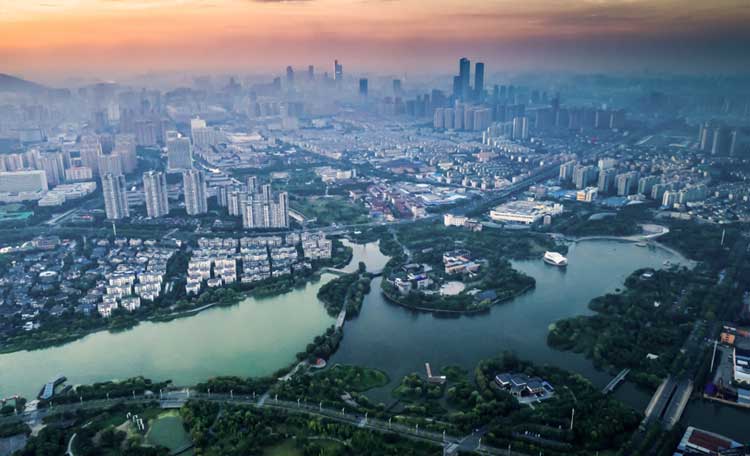
Bangkok's recent floods raise an interesting question:
Are CBDs valuable because they are economic centres? Or do they become economic centres because they are the most accessible parts of a city?
The Floods Revealed More Than a Drainage Problem
During the recent floods, parts of Bangkok experienced severe disruption, particularly across eastern districts where many residential communities were affected. Yet much of Bangkok's CBD remained operational while large parts of the city experienced severe disruption. At first glance, this appears to be a story about flood resilience. But perhaps it is actually a story about access.
What If Access Is the Real Competitive Advantage?
The conventional view is that CBDs are resilient because they are important. But the opposite may be true. CBDs may be important because they are resilient. They are supported by multiple transport options, alternative routes, and layers of infrastructure that allow people and businesses to keep moving even when part of the system fails. In other words, when part of the system fails, the city can often rely on another. We often assume economic activity creates a CBD. But Bangkok's recent floods suggest the relationship may work the other way around.
Economic activity tends to concentrate where access is most resilient. The strongest locations are not necessarily the locations with the most buildings. They are often the locations with the most resilient access networks.
Rethinking Location Strategy
Climate-related disruptions are introducing new considerations.
Today, organisations may need to ask:
- Can employees still reach the workplace during a disruption?
- Are there multiple transport and access options available?
- How quickly can operations continue if part of the network is affected?
The discussion is shifting from location quality to access resilience.
Perhaps We Are Asking the Wrong Question
The recent floods prompted many discussions about whether Bangkok's CBD proved resilient. But that may not be the most important question. A more useful question might be:
What makes a CBD resilient in the first place?
The answer may not be premium office space. It may not even be the address itself. It may be the strength of the network supporting it. Because if people, businesses, and infrastructure cannot reliably connect to a location, economic activity eventually moves elsewhere.
So What?
As climate-related risks become a larger part of business decision-making, companies may need to rethink how they evaluate locations. A more important question may be:
Does this location have the most resilient access network?
CBDs are not resilient because they are economic centres. They become economic centres because they are supported by resilient access networks.