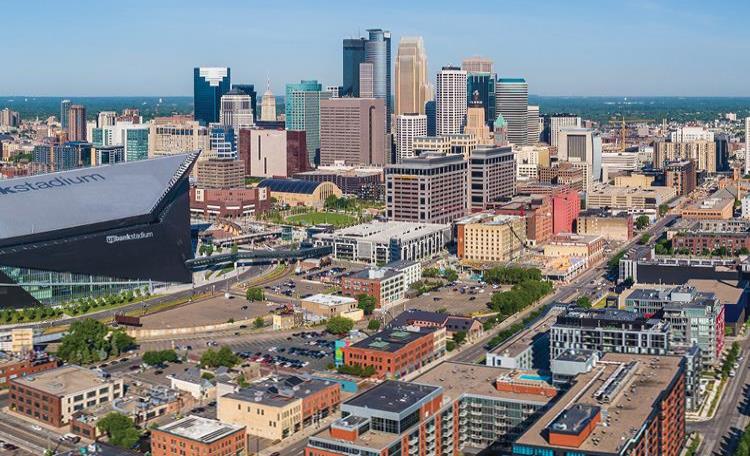
Economic Overview:
The Minneapolis–St. Paul economy showed signs of cooling in Q3 2026. Nonfarm employment held at just over 2.0 million workers, while the local unemployment rate climbed 30 basis points (bps) year-over-year (YOY) to 4.1%. At just 10 bps below the U.S. average of 4.2%, the gap between local and national labor market conditions narrowed, reflecting a departure from the metro's longstanding pattern of outperforming national employment trends.
Supply: Vacancy Steady as Sublease Space Increases
Overall vacancy held steady at 4.9% in Q3 2026, though it remained 40 bps higher YOY. Occupiers relocating, expanding, or consolidating into newer facilities drove sublease vacancy up 30.7% quarter-over-quarter (QOQ) to nearly 2.0 million square feet (msf) while direct vacancy declined 2.3% QOQ. The divergence reflects a continued flight to quality as occupiers favor newer, more functional industrial facilities. Through Q3 2026, developers completed nearly 2.0 msf of inventory, including 798,000 sf of speculative space that was fully leased. With limited speculative deliveries expected through year-end, options for modern, high-clear space remain limited.
Demand: New Leasing Up YOY on Large Deals
New leasing totaled approximately 3.2 msf in Q3 2026, the strongest quarter since Q4 2024, lifting year-to-date (YTD) activity to 8.2 msf, 19.1% above 2025. Larger transactions drove the increase, with average deal size rising 25.5% despite a 5.2% decline in deal count. Tenants signed 13 leases exceeding 100,000 sf through Q3, while more than 12 msf of active requirements from 3PL, manufacturing, retail trade, and data center-adjacent users supported future demand. Leasing activity in Q3 was led by the Southeast submarket, which recorded approximately 1.0 msf of new deals as occupiers continued to favor Eagan and Lakeville, while demand for spaces between 30,000 and 60,000 sf remained muted in some submarkets.
Sales: Investor Demand Supported by Portfolio Sales
Investor demand remained healthy through Q3 2026, supported by a strong volume of portfolio and core asset transactions. The quarter was highlighted by Brookfield's $167.8 million acquisition of a 1.7-msf industrial portfolio, establishing scale in the Twin Cities market. Marketed assets continued to attract multiple bidders, while the impact of the Federal Reserve's September rate increase on future pricing remains uncertain.